- 1
- Campaigns
- 1
- Data Products

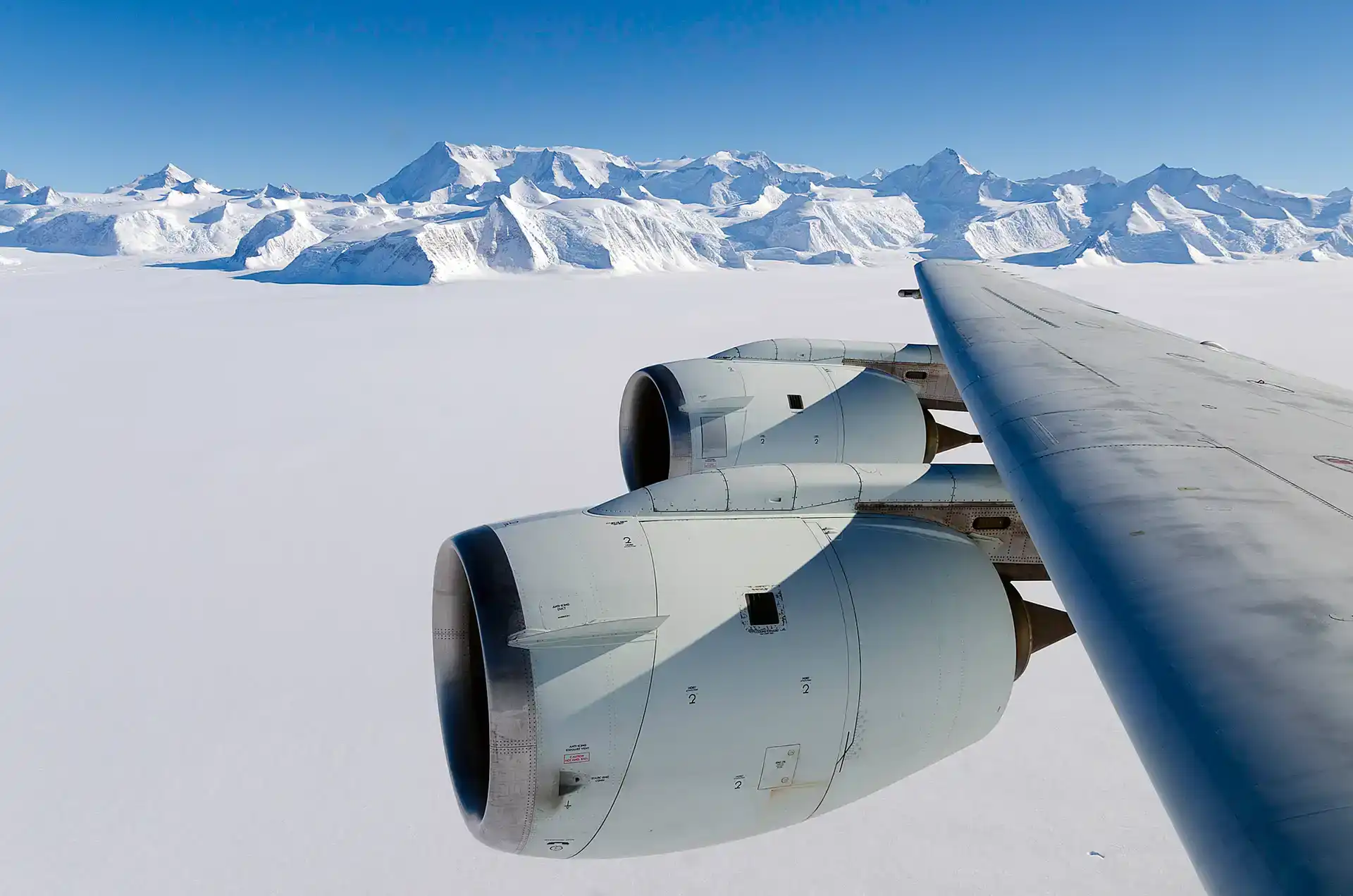
Overview
This description will be added in a future version.
Online information
Related Campaigns & Instruments
Review the instruments operated on this platform for each of these field campaigns
Slide 1 of 1


Plankton, Aerosol, Cloud, ocean Ecosystem Postlaunch Airborne eXperiment
2024
Southern and Central California
view all deployment dates
1 Deployment
· 15 Data Products| 2024-08-28 | 2024-09-30 |
The High-Performance Liquid Chromatograph (HPLC) is an in situ ground-based analyzer that separates and identifies components in a sample of air or a mixture. It works by injecting a liquid into the sample, causing different flow rates for each component as they pass through the column. As each component exits the column, its concentration is measured at high resolution. In Earth science research, HPLC is commonly used to detect various trace species in the atmosphere, such as formaldehyde, hydrogen peroxide, and volatile organic compounds (VOCs). Although primarily used for laboratory analysis and ground-based measurements, it can also be employed for airborne measurements.
Earth Science > Atmosphere > Atmospheric Chemistry > Carbon And Hydrocarbon Compounds > Formaldehyde
Earth Science > Atmosphere > Atmospheric Chemistry
Earth Science > Atmosphere > Atmospheric Chemistry > Carbon And Hydrocarbon Compounds
Earth Science > Atmosphere > Air Quality > Volatile Organic Compounds
Earth Science > Atmosphere > Air Quality
Earth Science > Atmosphere > Atmospheric Chemistry > Hydrogen Compounds
Earth Science > Atmosphere > Atmospheric Chemistry > Hydrogen Compounds > Hydroperoxy
Sunphotometers are passive optical sensors that measure the amount of sunlight. They are pointed directly at the sun to measure direct sunlight, not sunlight scattered by aerosols. These measurements can be used to determine aerosol optical depth by applying Beer’s Law. Sunphotometers have been deployed on aircraft, research vessels, and field sites for aerosol research and monitoring.
Earth Science > Atmosphere > Aerosols
Earth Science > Atmosphere > Atmospheric Radiation > Sunshine
Earth Science > Atmosphere > Atmospheric Radiation
Earth Science > Atmosphere > Aerosols > Aerosol Optical Depth/thickness
Digital cameras provide imagery for research applications. Cameras are mounted on aircraft to collect aerial imagery for mapping and surveying, environmental monitoring, cloud observations, agriculture, geological studies, and other Earth science applications. They are also deployed at field sites to capture visual observations that monitor changes in land cover, vegetation, clouds, air quality, glaciers, and other phenomena.
Earth Science > Spectral/engineering > Visible Wavelengths > Visible Imagery
The AErosol RObotic NETwork (AERONET) is a federated network of ground-based remote sensing aerosol sensors established in 1993 by NASA and the PHOtométrie pour le Traitement Opérationnel de Normalisation Satellitaire (PHOTONS). Each AERONET site includes a CIMEL Electronique sunphotometer that measures solar irradiance and sky radiances. These measurements are used to determine aerosol properties, including aerosol optical depth and extinction. The sunphotometers operate at nine wavelengths (340, 380, 440, 500, 675, 870, 937, 1020, and 1640 nm) and provide aerosol data approximately every 15 minutes. AERONET sites are distributed worldwide, enabling mapping of about 90% of the Earth’s surface.
Earth Science > Atmosphere > Aerosols
Earth Science > Atmosphere > Aerosols > Aerosol Optical Depth/thickness
Earth Science > Atmosphere > Aerosols > Aerosol Radiance
Earth Science > Atmosphere > Atmospheric Radiation > Solar Irradiance
Earth Science > Atmosphere > Aerosols > Aerosol Extinction
Earth Science > Atmosphere > Aerosols > Aerosol Particle Properties
The Hyperspectral Surface Acquisition System Polarimeter (HyperSAS-POL) is a hyperspectral radiometer developed by the Optical Remote Sensing Laboratory at City College of New York (CCNY). It is typically deployed on research vessels and other water-based platforms. It measures sky and sea radiance across 180 wavelengths from 305 to 905 nm at a single azimuthal angle. HyperSAS-POL records data every 30 minutes to produce high-resolution time series.
Earth Science > Oceans > Ocean Optics
Earth Science > Atmosphere > Atmospheric Radiation > Solar Irradiance
Earth Science > Atmosphere > Atmospheric Radiation
Earth Science > Oceans > Ocean Optics > Radiance
Earth Science > Atmosphere > Atmospheric Radiation > Spectral Irradiance
Video cameras capture footage of various phenomena for research. They are used on aircraft to provide continuous views of weather and terrain below the flight path. Video cameras are also employed to verify the aircraft's flight track. Additionally, they are deployed at field sites to monitor changes in vegetation, land cover, clouds, air quality, glaciers, and other Earth science phenomena.
Earth Science > Spectral/engineering > Visible Wavelengths > Visible Imagery
The Pandora Spectrometer System is a ground-based UV-VIS spectrometer that measures column amounts of atmospheric trace gases. It uses total optical absorption spectroscopy to retrieve ozone, nitrogen dioxide, formaldehyde, and other trace gases. Pandora operates in the 280-525 nm spectral range at a resolution of 0.6 nm. It can perform both direct-sun and all-sky radiance measurements, with an overall measurement time of 80 seconds. Pandora is part of the Pandonia Global Network, a network of identical instruments.
Earth Science > Atmosphere > Atmospheric Chemistry > Trace Gases/trace Species
Earth Science > Atmosphere > Atmospheric Chemistry > Nitrogen Compounds > Nitrogen Dioxide
Earth Science > Atmosphere > Atmospheric Chemistry > Carbon And Hydrocarbon Compounds > Formaldehyde
Earth Science > Atmosphere > Atmospheric Chemistry > Oxygen Compounds > Ozone
Earth Science > Atmosphere > Atmospheric Chemistry
Filter data products from this platform by specific campaigns, instruments, or formats.
Campaigns
CAMPAIGNS▼
Instruments
INSTRUMENTS▼
Formats
FORMATS▼